
AI Blog & Insights
Discover the latest developments in artificial intelligence, from cutting-edge research to practical applications.
Showing 12 of 64 articles
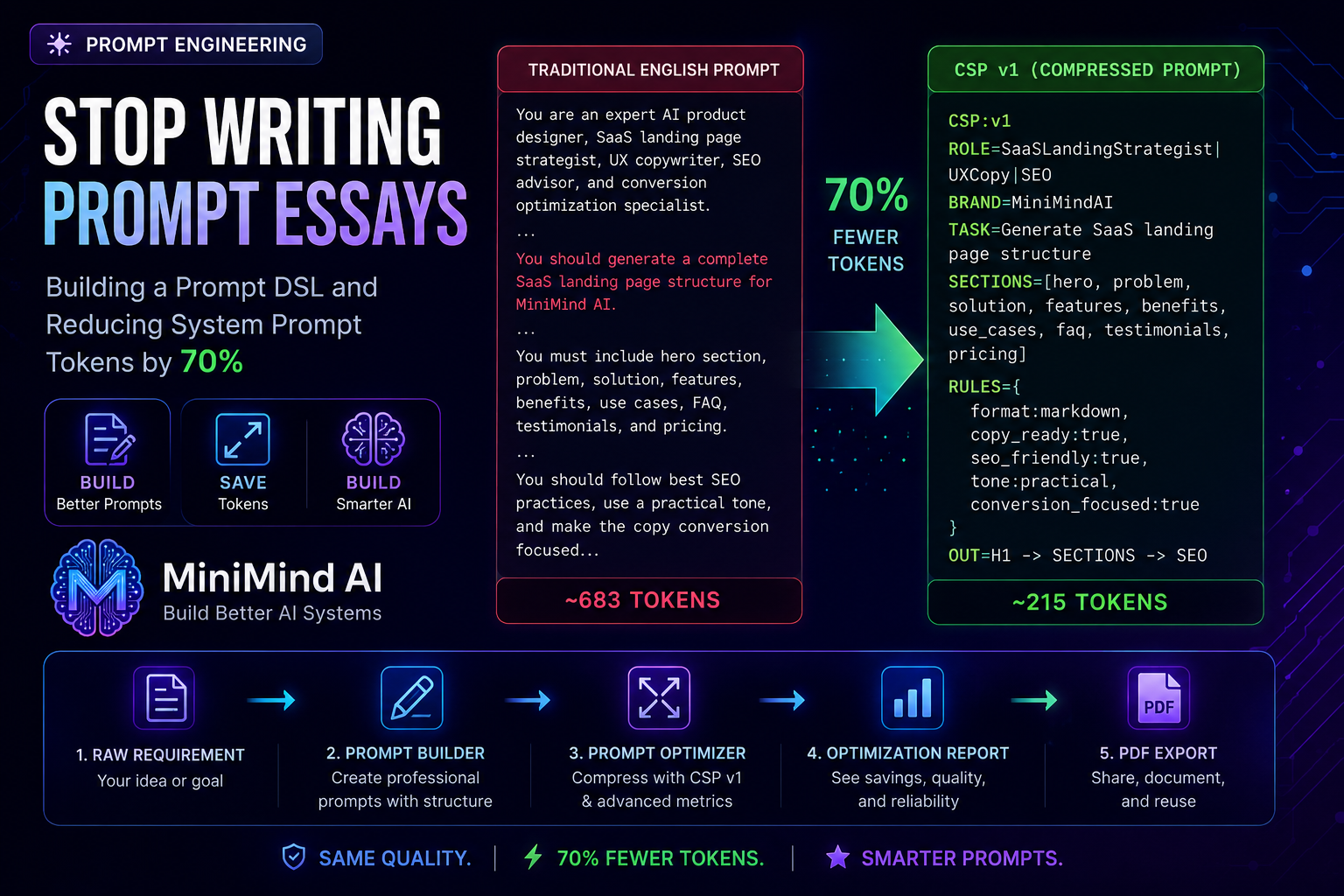
Why We Built CSP v1: Rethinking Prompt Engineering for AI Agents
AI prompts are becoming more complex, making them hard to maintain and costly to execute. Learn why MiniMind AI created CSP v1, a structured prompt DSL that treats prompts as software configurations.
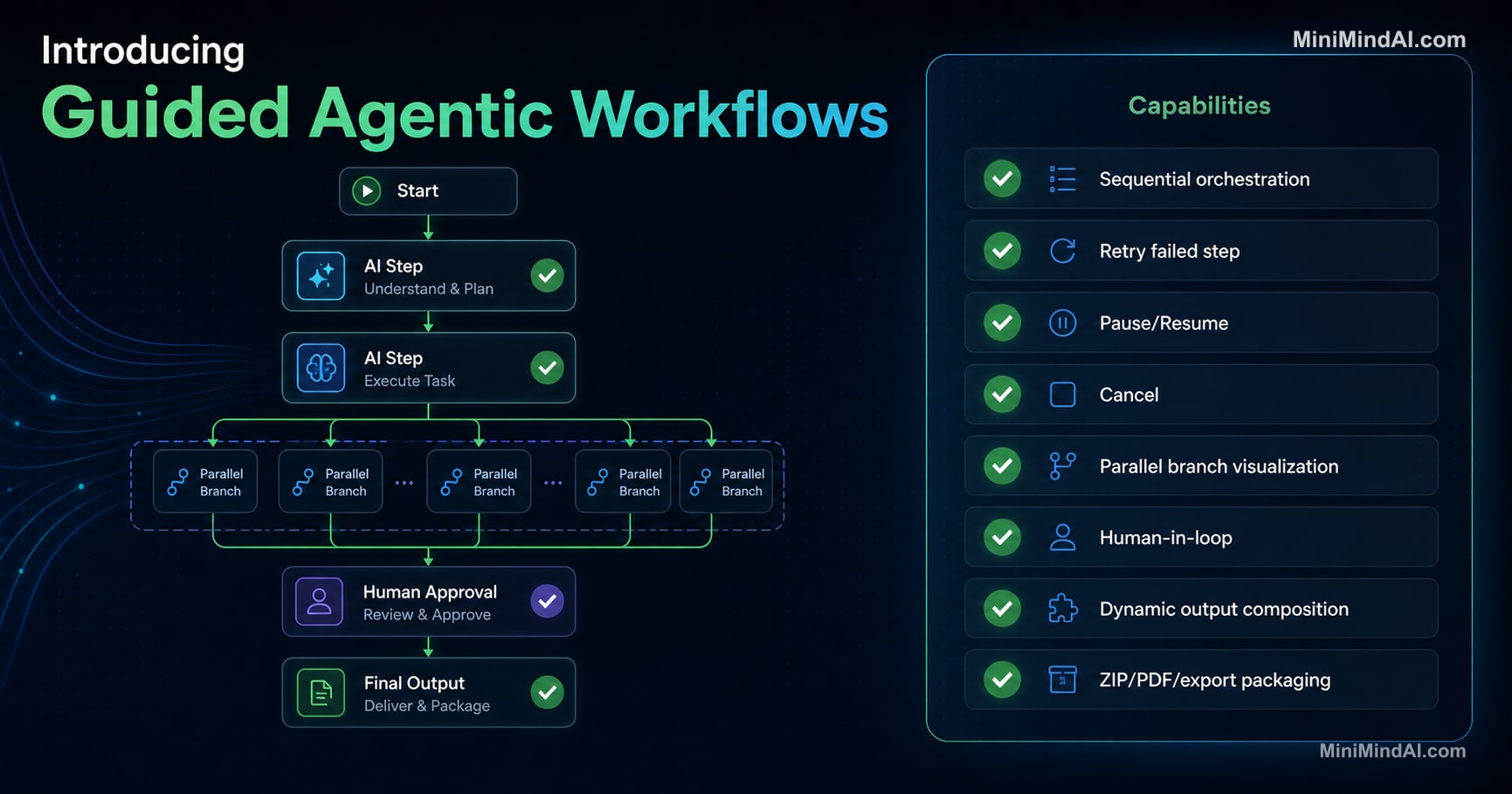
Introducing Guided Agentic Workflows by MiniMind AI
MiniMind AI Guided Agentic Workflows move beyond one-shot prompts with orchestration, human-in-loop review, branching, retry, pause/resume, and packaged outputs.
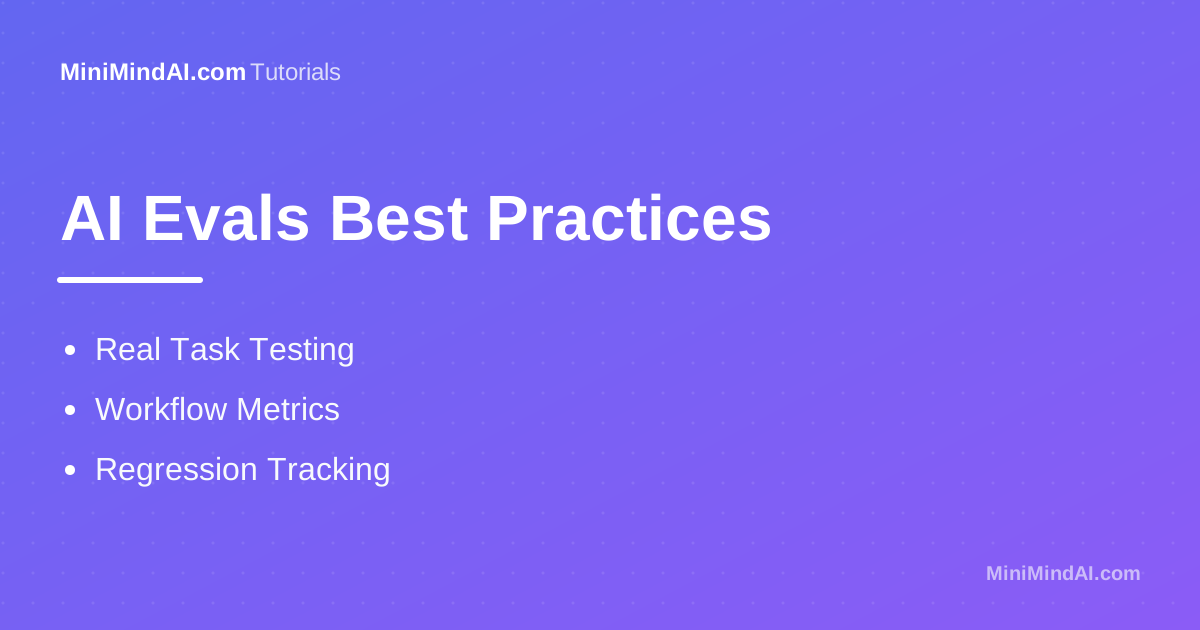
AI Evals Best Practices: Why Production AI Needs Testing That Looks Like Reality
If your AI app is not evaluated on real tasks, it is not really tested. Learn the practical role of evals in production systems.
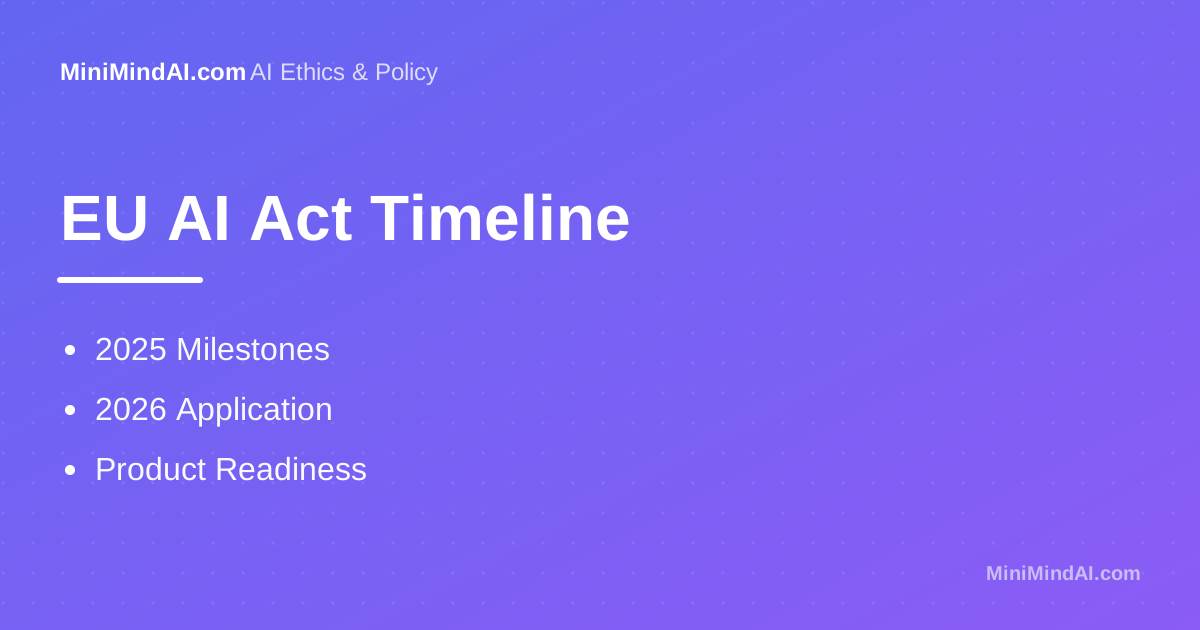
EU AI Act Timeline: What Product Teams Need to Know by 2026
The EU AI Act is now a real product timeline. Learn the key dates, phases, and operational questions teams should be asking.
Google AI Mode and the Future of Search: What Changed in 2025 and Why It Matters
Google’s AI Mode rollout changed how search works. Here is the factual timeline and what it means for SEO in an AI-mediated web.
On-Device AI Is Becoming Real: What Apple’s Foundation Models Framework Signals
Apple’s Foundation Models framework shows how on-device AI is moving from theory into mainstream app architecture.
Computer Use Agents: What Changes When AI Can Click, Type, and Navigate
Computer-using agents introduce a new execution layer for AI. Learn where they help and why safety must come first.
Realtime Voice Agents: How Speech-to-Speech AI Is Changing Product Design
Realtime voice systems are changing how AI products are designed. Learn what speech-native agents require beyond transcription.
Reasoning Models vs GPT Models: When Extra Thinking Time Actually Helps
Reasoning models and GPT models are optimized for different workloads. Learn when deeper inference is worth the tradeoff.
Prompt Caching Explained: Why It Matters for Cost, Latency, and UX
Prompt caching is one of the highest-leverage AI optimizations. Learn how it works and why stable prompt architecture matters.
Structured Outputs vs JSON Mode: What Reliable AI Responses Actually Require
JSON mode is useful, but Structured Outputs changed what production AI can safely automate. Here is the difference that matters.
Model Context Protocol (MCP) Explained: Why AI Tooling Is Standardizing
Understand what MCP is, why Anthropic introduced it, and how open tool standards are reshaping agent and enterprise AI architectures.