Strategic Career Growth in the AI Era: Future-Proofing Your Skills for 2026
Don't compete with AI for efficiency; compete for insight. Explore the roadmap for surviving and thriving in an economy defined by agentic workflows.
Strategic Career Growth in the AI Era: Future-Proofing Your Skills for 2026
The AI revolution is not about "Humans vs. Machines." It is about "Humans with AI vs. Humans without AI." In 2026, the job market has split into two camps: those who perform repetitive tasks that algorithms can handle, and those who orchestrate intelligence to solve high-value, complex problems.
This final guide in our Applied AI series provides a strategic roadmap for professionals looking to thrive in an economy defined by silicon-speed and agentic workflows.
The AI Value Stack
To remain indispensable, you must move up the "Value Stack" to where human intuition and judgment are most critical.
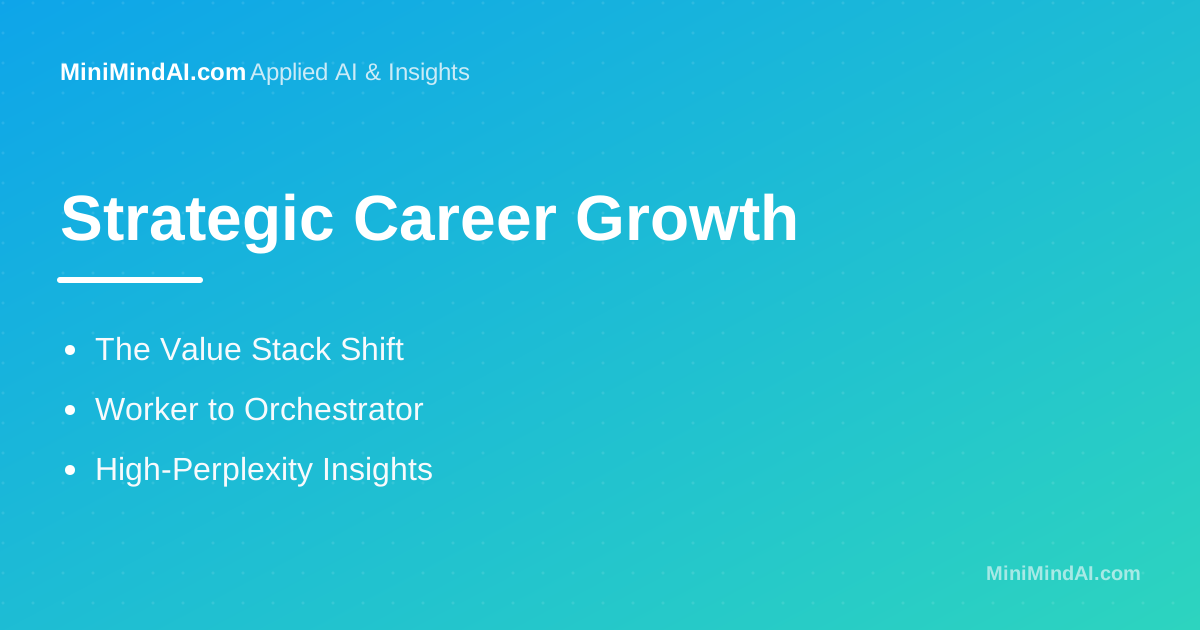
1. From "Editor" to "Orchestrator"
In 2026, the demand for "content creators" or "code writers" has evolved into a demand for AI Orchestrators.
- The Skill: It's no longer about knowing how to write a function; it's about knowing how to architect a multi-agent system (as discussed here) that writes the software for you.
- The Shift: You are moving from the "worker" to the "conductor" of the digital orchestra.
2. Mastery of "High Perplexity" Thinking
AI is excellent at the probable and the predictable. Humans excel at the Deeply Improbable.
- Intuition and Creativity: AI generates based on patterns of the past. Strategic growth comes from identifying trends that haven't happened yet.
- CX and Empathy: In a world of automated text, high-touch, empathetic human communication becomes a premium luxury good.
3. Technical Literacy: Speaking "Machine"
You don't need to be a data scientist, but you must be "AI Literate."
- Prompting as a Language: Understanding how to guide models through reflection and self-correction (detailed here) is as essential as typing was in the 1990s.
- Tools over Tasks: Mastery of agentic tools like MiniMind AI becomes the foundational skill for every white-collar profession, from Law to Real Estate.
4. The Ethics of Intelligence
As AI takes over more decisions, the role of the "Ethical Auditor" grows.
- Judgment: Who is responsible when an AI makes a medical error or a biased hiring decision? In 2026, professionals who can bridge the gap between algorithmic output and human accountability are in the highest demand.
- Governance: Understanding the regulations and safety protocols of AI is a burgeoning career path for legal and corporate strategists.
5. Continuous Adaptation: The "Half-Life" of Skill
In 2026, the "Half-life" of a technical skill is 18 months.
- Learning to Learn: The most valuable skill you can possess is the ability to rapidly internalize new AI tools and protocols.
- The Strategy: Spend 20% of your time experimenting with the "Frontier"—the new models, the new protocols, and the new agentic frameworks.
Career Tip: Don't compete with AI for efficiency. Compete with AI for Insight. An AI can analyze the data, but only a human can decide why that data matters for the future of the company.
By mastering these technical bridges, you can transition from simple automation to building fully autonomous AI systems that reason and act with high reliability.
Conclusion
The AI era is not a threat to the ambitious; it is the greatest opportunity in human history. By mastering the tools of intelligence and refocusing on higher-order strategy, ethics, and creativity, you can build a career that is not just secure, but revolutionary.
MiniMind AI provides the foundational engine and versatile tool suite needed to orchestrate your intelligent workflows and build your AI-driven future.