The Future of Search: How Generative Engines are Replacing Keywords
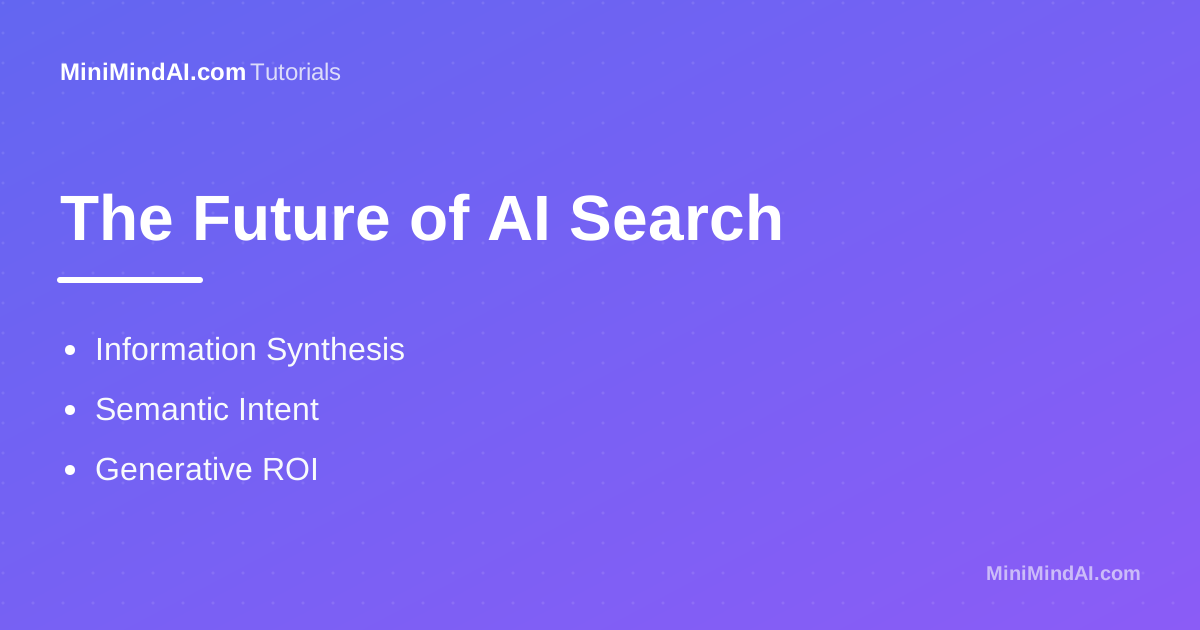
The end of blue links. Learn how semantic intent and information synthesis are redefining the SEO landscape in 2026.
The Future of Search: How Generative Engines are Replacing Keywords in 2026
The End of the "Blue Link" Era
For nearly three decades, "Search" meant typing a few keywords into a box and scrolling through a list of blue links. In 2026, that era is officially over. The rise of Generative Search Engines (GSEs) like Perplexity, SearchGPT, and MiniMind Search has shifted the paradigm from "Find me a link" to "Answer my question."
What is Generative Search?
Generative Search doesn't just index the web; it understands it. When you ask a GSE a question, it:
- Synthesizes Information: It reads dozens of relevant sources and provides a coherent, cited answer.
- Analyzes Intent: It understands the nuances of human language, recognizing the difference between "How do I build a table?" (Woodworking) and "How do I build a table?" (SQL Databases).
- Maintains Context: You can ask follow-up questions without repeating yourself, just like in a conversation.
The SEO Impact of 2026
For digital marketers and content creators, the rules have changed. The goal is no longer to "rank for a keyword," but to be included in the Synthesis.
1. High Perplexity Content
GSEs prioritize content that is thorough, technical, and provides original insight. "Fluff" content written for legacy SEO bots is now filtered out by the AI's quality classifiers.
2. Semantic Intent Over Keyword Density
Search engines now look for the semantic closeness of your content to a user's problem. Writing naturally and answering complex questions directly is more effective than repeating "Best AI Tool" ten times.
3. Citations as the New Backlinks
Being cited as a source by an AI engine is the 2026 equivalent of a #1 ranking. It provides immediate authority and a direct link for users who want to "Deep Dive" into the source material.
The Rise of Vertical Search
In 2026, "General Search" is being challenged by "Vertical Search"—AI engines specialized for specific industries:
- Legal Search: AI that only indexes verified law databases and court cases.
- Medical Search: Engines that filter out medical misinformation to provide clinically-backed answers.
- Code Search: AI that understands repository structures and library dependencies.
Conclusion: Understanding Over Indexing
Search in 2026 is no longer about retrieval; it's about understanding. By moving from keywords to context, generative engines are making the world's knowledge more accessible, more accurate, and more human than ever before. The future of the web belongs to those who provide real value, not just high-ranking keywords.