AI in Precision Medicine: Accelerating Drug Discovery in 2026
Biology at the speed of code. See how AlphaFold 3 and Bio-AI are designing custom cures based on your unique DNA.
AI in Precision Medicine: Accelerating Drug Discovery in 2026
The Biological Data Explosion
Historically, drug discovery was a "trial and error" process that took over a decade and cost billions of dollars. In 2026, the arrival of AlphaFold 3 and specialized Biomedical LLMs has transformed medicine into a predictive science. By simulating biological interactions at the atomic level, we are now entering the era of Precision Medicine.
How AI is Saving Lives in 2026
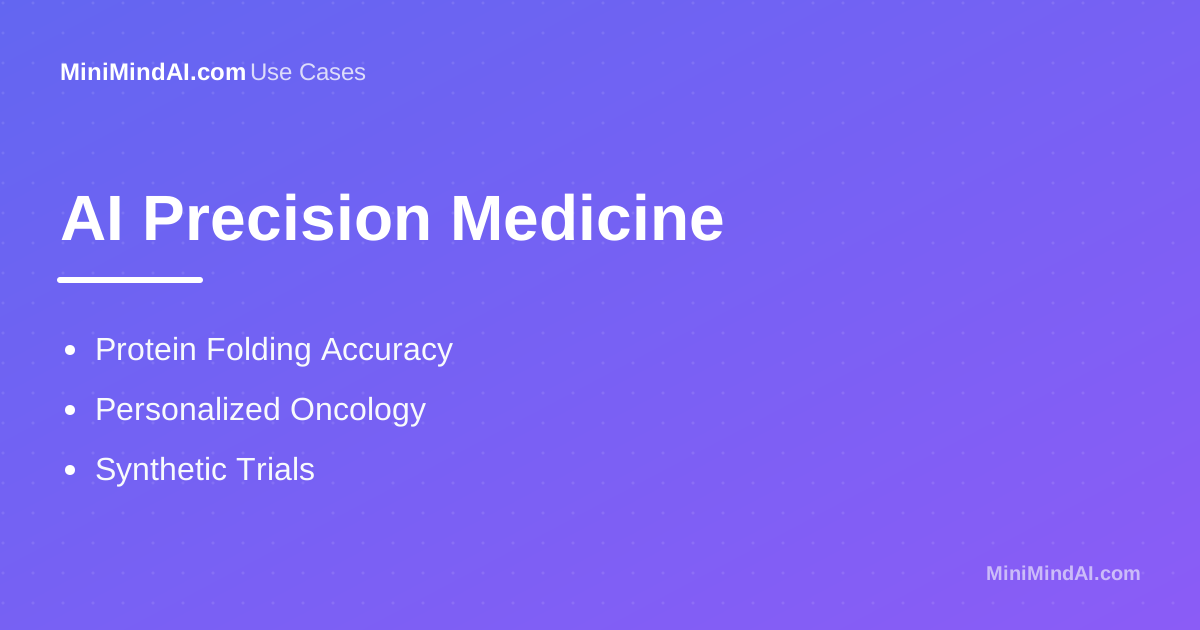
1. Protein Folding and Molecular Docking
AI can now predict the 3D structure of complex proteins and, more importantly, how they will interact with potential drug molecules (docking). In 2026, researchers can screen millions of virtual compounds in a single day, identifying candidates for rare diseases that were previously "undruggable."
2. Personalized Oncology
Cancer treatment is no longer standardized. AI models analyze the specific genetic mutation of a patient's tumor and compare it against global clinical trial data to suggest a "Hyper-Personalized" cocktail of therapies. This has significantly increased survival rates for aggressive late-stage cancers.
3. Generative Clinical Trials
To speed up FDA approvals, 2026 sees the use of Synthetic Control Arms (SCAs). Using AI to model how a "dummy" group of patients would react based on historical data allows researchers to reduce the number of human participants needed, lowering costs and bringing life-saving drugs to market 3-4 years faster.
The Rise of "Bio-AI" Models
Traditional AI was trained on text; 2026's "Bio-AI" models are trained on the Language of Biology—DNA sequences, amino acid chains, and cellular signaling pathways. These models don't just "chat"; they "design" antibodies and enzymes from scratch to target specific pathogens.
Conclusion: The End of General Medicine
As we look toward the late 2020s, the concept of a "general" drug for a "general" population will seem primitive. By bridging the gap between digital intelligence and physical biology, AI is ensuring that the medicine of 2026 is as unique as the DNA of the patient it treats.